Christmas Tea Cup Coloring Page: An Asset for Seasonal Graphics
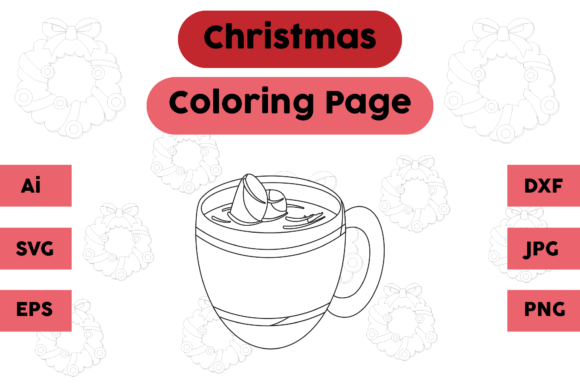
When a client asks for a seasonal concept that feels cozy, approachable, and festive, the immediate search begins for a visual anchor. My first impression of the Christmas Coloring Page – Tea Cup asset is its hand-drawn charm. It doesn’t scream high-tech digital art; instead, it evokes the warmth of a sketchbook, a mug of something hot, and a quiet moment. The style is inherently welcoming, leaning toward a rustic, handmade aesthetic rather than a slick corporate one. It feels like it belongs to a client who values personality—a small boutique, a craft-focused brand, an Etsy seller launching a holiday line, or a local cafe planning a community event.
The Mood of a Hand-Drawn Holiday Cup
This graphic asset creates a specific mood: nostalgic comfort. The tea cup illustration, with its clean lines and inviting simplicity, acts as a visual shorthand for relaxation, generosity, and holiday cheer. For a designer working on a brand identity or marketing visuals for a handmade business, this mood is gold. It immediately sets a tone that can be woven into packaging design, social media graphics, or even the decorative details of an event invitation. The style represents that growing market segment that prioritizes authenticity over polish, where a slightly imperfect line feels more trustworthy than a sterile vector.
Practical Performance Across Client Projects
Let’s walk through real design situations. For logo design, this asset wouldn’t serve as the primary mark, but as a supporting illustrative element for a brand’s holiday sub-branding or a seasonal product label. In product packaging for a holiday tea blend or a set of artisan mugs, it could be a beautiful central motif, especially when paired with a clean, modern sans-serif font for balance. As a social media graphic for Instagram posts or Pinterest pins promoting a Christmas sale, it provides an instantly relatable focal point. For printable designs like wall art, holiday cards, or coloring pages themselves, its clarity at the provided canvas size is a functional starting point.
The inclusion of multiple file types—AI, EPS, SVG, DXF, JPG, PNG—is a professional touch that speaks directly to versatility. The SVG and vector formats mean this isn’t just clipart; it’s an editable design asset. This allows for integration into Cricut projects for custom stickers or t-shirt designs, sublimation designs for mugs and tote bags, and scalable use in Canva templates or more complex editorial design. The PNG with transparency is ready for quick placement over website graphics or digital ads without a fussy background removal.
Where This Tea Cup Graphic Works Best
This asset shines in large layout areas. Think of a hero graphic on a holiday campaign webpage or a full-page illustration in a seasonal brochure. It excels as a decorative accent in a themed collection—perhaps alongside other hand-drawn elements like cookies or wreaths. Its clarity makes it ideal for product mockups, especially for print-on-demand sellers visualizing their merchandise. It can serve as a charming detail on packaging design, like a small repeat pattern on a gift box. For supporting brand elements during a holiday season, it can refresh a brand’s usual visuals without overhauling the entire identity.
Caution Zones and Design Considerations
This graphic should be used carefully in small sizes. The fine details of the drawing could become muddy when reduced to a tiny icon. In crowded layouts with many competing elements, it might lose its cozy impact and become visual clutter. Placing it on a complex background could harm readability. For projects requiring a minimalist branding approach or very clean visual hierarchy, its illustrative nature might need to be heavily balanced with ample whitespace and simple typography. It’s not inherently suited for professional corporate materials unless the brand is deliberately adopting a casual, human-centered holiday message.
Impact on Readability and Brand Perception
Integrating this Christmas Coloring Page – Tea Cup into a client’s project directly affects visual hierarchy. It’s a strong, emotional element that can dominate a composition, so typography needs to be chosen to complement, not compete. A simple sans-serif or a clean script font often works well. This asset boosts emotional appeal and audience engagement by feeling personal. For a small business branding effort, that builds visual trust. However, to maintain professionalism and brand consistency, it shouldn’t be used haphazardly. It must feel like a deliberate, stylish extension of the existing brand voice, not a random holiday clipart drop-in.
The Designer’s Practical Checklist Before Use
Before committing this asset to a real client project, I run a few tests. First, I check it in black and white to ensure the lines hold up if color isn’t an option. I place it on both light and dark backgrounds to verify contrast and legibility. I preview it at small and large sizes to confirm scalability, especially for the vector files. I drop it onto a few real mockups—a mug, a t-shirt, a website header—to see how it integrates. For print quality, I examine the JPG at high resolution. I inspect the PNG transparency edges.
Crucially, I test it alongside different typography styles. How does it pair with a serif font for a traditional look? With a sans-serif font for a modern mix? With a script font for elegance? With a handwritten font to amplify the cozy mood? With a display font for a bold headline? This determines the final design direction. And of course, I confirm the commercial licensing. For a client’s business project, the license must allow for use in marketing visuals, packaging design, and commercial sale of final products. Assuming this asset comes with a commercial license, it becomes a viable tool for digital sellers and print-on-demand applications.
A Final Thought on Seasonal Asset Selection
The Christmas Coloring Page – Tea Cup is more than a downloadable graphic; it’s a design decision. Selecting it means choosing a path of warmth and handmade appeal for a client’s holiday season. It won’t fit every project, but for the right one—a creative marketplace seller, a boutique needing campaign visuals, a blogger creating festive editorial design—it provides a polished, editable, and emotionally resonant starting point. In the toolkit of a designer servicing the handmade and small business world, such assets are the secret to making seasonal work feel both professional and personally crafted.